



Path I - Biological Systems
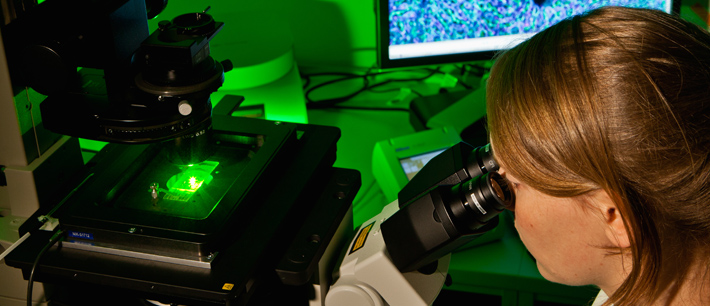
The mission of the Path is to study emergent behavior and information processing in biological systems and identify principles that underlie biological function and could be beneficial for engineering applications. This is pursued in close cooperation between biologists, engineers, physicists, computer scientists, and mathematicians, combining concepts from the various disciplines. Important challenges are to understand the emergence of robustness, parallelism, convergence, and self-organization in information-processing systems. The goal is to deepen the understanding of the biological systems and to inspire novel engineering applications.
Path Leader: Prof. Marino Zerial

Path Co-Leader: Prof. Marc Timme
Investigators:
- Prof. Dr.-Ing. Dr. h.c. Gerhard Fettweis
- Dr. Benjamin Friedrich (RGL Biological Algorithms Group)
- Prof. Dr. Frank Jülicher
- Prof. Dr.-Ing. habil. Christian Georg Mayr
- Prof. Dr. Ivo Sbalzarini
- Prof. Dr. Marc Timme
- Prof. Dr. Marino Zerial
Previous members:
The goal of the Biological Systems Path is to study emergent behavior of biological systems, such as resilience, parallelism, scalability, self-organization, and energy efficiency, from an information-processing (computation and communication) viewpoint, and to make available this knowledge for innovative engineering applications. We analyze biological examples of information processing where such properties emerge from simple interactions at smaller scales. Examples of such interactions include signals changing from analog to digital (e.g., a cell-fate decision was made), from digital to analog (e.g., turning on a finite set of genes leads to a graded protein concentration), or from stationary to oscillatory (e.g., triggering a cellular oscillation within the ear). How robust (reliable) are these transformations? How is robustness achieved with small numbers of unreliable components? And how can a biological system “solve” complex combinatorial problems with a small number of components? These are some of the key information-processing questions that are addressed in this Path.
Electronic information-processing systems also use different modes of computation (analog/digital) and different scales of implementation. For instance, analog transistors on a chip are used to make digital decisions on the circuit level. In communication systems, digital information is carried by analog signals that are processed by both analog and digital components, before being decoded back to information. Hence, it seems promising to apply some of these concepts to biological information-processing systems, and to compare biological systems with electronic systems in terms of their complexity and (energy) efficiency. Biological systems are among the most complex systems known, and it is possible that universal principles emerge that can provide insight into the increasingly complex engineering systems of the future.
The Bio Path is the outreach and innovation Path of cfaed. It bi-directionally combines two areas where Dresden is strong: microelectronics and the life sciences. As a trans-disciplinary Path, we integrate researchers from both disciplines and allow them to mutually learn from each other. In this, biologists import new concepts and knowledge from engineers and computer scientists, and vice versa. This is fundamentally different from the often-cited “bio-inspired engineering” approaches. Here, the study of the biological system using engineering principles is the driving force, and concepts are imported from the other disciplines. The Biological Systems Path consists of seven interdisciplinary projects, aiming at transferring knowledge bi-directionally between biology and engineering.
Specific biological information-processing systems are analyzed using tools from engineering, computer science, and mathematics. The systems are “reverse engineered” to determine the underlying algorithms and design principles. We quantify the speed, resilience, and efficiency of a broad range of systems from cell, tissue, and developmental biology. The strong emphasis on quantitative data in the biological labs, in combination with the theoretical expertise in the engineering, computer science, and mathematics groups, allows us to obtain definitive answers to key questions concerning biological computing and information processing. Ultimately, we seek to know how closely biological systems approach the theoretical limits set by physics and information theory.
In parallel, new theoretical methods are developed that are applicable to a number of biological problems. These methods include logic-based modeling, communication theory, agent-based simulations, optimization theory, and non-linear dynamics. Because each theoretical approach can be used to analyze different biological problems, the theoretical groups provide important connections between the various projects.
As a bi-directional Path, the engineering principles identified in biological systems are made available to the other Paths in numerous inter-Path collaborations. They may inspire novel ways of thinking about the engineering systems of the future.
The list below provides an overview of all current projects and the participating investigators.
No. |
Investigator |
Topic |
2 |
Zerial, Deutsch/Brusch, Sbalzarini |
Maintenance of Function During Repair and RegenerationAn outstanding technological challenge is the interrupt-free maintenance of system function despite random failures of the constituent parts. In biological systems, individual cells grow old and die, yet the organs made of such cells function without interruption. We focus on the liver and aim at discovering decentral load balancing and network regeneration algorithms. Immediate applications include the balancing of computing load within the parallel particle mesh library. |
4 |
Zerial, Jülicher, Fettweis |
How cells compute biochemical signalsThis proposal aims at transferring knowledge from cell-based into engineering-based computing. Cells receive instructions (e.g. to divide) in the form of signalling molecules that bind to receptors on the surface and transduce information to the nucleus. Cells integrate multiple signals over time, filter noise and reliably compute a fate decision. Remarkably, signalling ligand-receptor complexes are packaged in endosomes at constant amount, which can be viewed as an analog-to-digital conversion. We will 1) develop models of signaling complexes distribution in the endosomal network; 2) learn from engineering the design principles of the cellular computer; 3) study possible applications to nanocomputers |
5 |
Fettweis, Jülicher(Schüffny, Siegmund) |
Robust Self-organized Synchronization of Separate Electronic Clocks inspired by Biological SystemsBoth in biology and in engineering, synchronization of many autonomously oscillating parts is an important concept; think of flashing fireflies, cardiac pacemaker cells, or multi-core systems. In electronic systems consisting of hundreds of autonomous cores with separate clocks, state-of-the-art techniques of synchronization can become highly inefficient. Understanding synchronization strategies in biological systems can provide novel approaches for synchronization in electronic systems. The project's goal is to seek for biologically inspired synchronization techniques for large systems of electronic clocks to support concerted operations. Using theories of coupled oscillators that capture the effects of signal transmission delays and signal filtering we analyze the synchronization properties of such systems. In parallel, we test our theoretical results with experiments on mutually delay-coupled electronic clocks. |
6 |
Sbalzarini, Howard, Baader |
Bioinspired Computing and Optimization Problem ClassificationEngineering and biology share the challenge of solving hard optimization problems in noisy environments. Biology has evolved different solution strategies that engineers mimic in bioinspired algorithms. But which algorithms work well on what problems? How should one classify optimization problems? Why do birds look for food in swarms, but squirrels don’t? We aim at learning a problem classification from biology, using it to provide a theoretical understanding of bioinspired algorithms, and applying these algorithms to circuit design, chemical computing, and systems biology |
8 |
Friedrich |
Mission of the Biological Algorithms groupWe seek to theoretically understand biological solutions for motility control and self-organization in cells and tissues. A special emphasis is on principles that make biological function robust in the presence of strong fluctuations. We combine dynamical systems theory, statistical physics, and image analysis to reverse-engineer physical mechanisms of robust feedback control. We want to understand emergent dynamics from simple rules. We enjoy close collaborations with biologists with rapid iteration loops between quantitative theory and experiment. Motility control: At the cellular scale, we study how noisy sensory information controls motion. Our model system are flagellated microswimmers, where we study swimming, steering, and synchronization, e.g. in sperm navigation for the egg. Pattern control: At the tissue scale, we study elementary rules of self-organized pattern formation during self-repair and adaptation to fluctuating environments. In the past, we have studied self-organized scaling of developmental patterns. Current project address design principles and transport in 3-dimensional tissues such as the liver. |
Previous Projects
Project 1
A Logic of Aggregation and Emerging Functionality (Baader)
In biological systems, new functionalities may emerge when small components (e.g., cells) are aggregated into larger entities (e.g., tissue). The purpose of this project is to develop a logic-based modelling language that is expressive enough to describe such phenomena, but still allows effective reasoning. The development of the formalism will be guided by examples found in biological systems, and the resulting formalism evaluated by comparing it to known models from systems biology.
Project 3
Strategies for Controlling Protein Concentrations (Siegmund, Beyer, Gross)
Cellular regulatory processes can be seen as ‘biological computing’. The goal of this project is to understand the processes controlling protein concentrations and to evaluate different regulatory strategies using mathematical models. This work should improve our understanding about which strategies are used in which context in order to meet conflicting optimization goals (e.g. resource efficiency versus speed). Ultimately, this should yield new strategies for implementation in engineered computing systems.
Project 7
Cell fate decision making in multicellular systems: a multiscale approach (Hatzikirou)
Our goal is the profound understanding of cell decision-making in multicellular systems by means of multiscale mathematical modeling. Single cell decision-making has been a major focus of biology. However, in a multicellular system, cell decisions influence and get influenced by its own micro-environment, consisted of homotypic and heterotypic components. This dialogue makes the system dynamics extremely complex.
Replacing the word “cell” by “agent”, we can draw a useful analogy between biological multicellular systems and technical multi-agent ones. The remarkable way that biological system process information can be a source of inspiration for novel engineering ideas.
I.5 project (Robust Synchronisation of Separate Clock Signals on Massively Multi-Core Chips inspired by Biological Systems)
The I.5 project aims at finding novel synchronization strategies for high performance multi-core architectures at low power consumption using concepts developed in the study of biological systems. To this point, the project has obtained interesting new results for networks of mutually coupled electronic oscillators. It has shown how two factors that individually hinder synchronization in such systems will together enable robustly synchronized states. On this basis, novel architectures that allow efficient and robust synchronization are under investigation. The theory is now being tested comparing analytic model predictions to Matlab/Simulink simulations and to experiments with electronic oscillator units, assembled in our group. Compared to prior architectures for globally synchronous operating applications our approach reduces wiring between the oscillators, drops the Master clock and thereby reduces power consumption and production cost. We expect applications in high performance Multiprocessor System-on-Chips (MPSoCs) architectures, distributed antenna arrays, and other large-scale electronic clocking systems communicating by means of time-continuous signals.
I.6 project (Bio-inspired Computing and Optimization Problem Classification)
Optimization problems are ubiquitous in engineering, ranging from parameter estimation to robust design optimization. In practical applications, the function to be optimized is usually not known in mathematical form, but candidate solutions can only be evaluated for quality. Such optimization problems are called "black-box problems". Evaluating the quality of a proposed design or solution in a black-box problem may involve running a computer simulation, performing experimental measurements, or asking an expert.
Due to the practical importance of black-box optimization problems in engineering, hundreds of heuristics and algorithms have been developed, including genetic algorithms, evolution strategies, particle-swarm optimization, simulated annealing, etc. It is a known fact that no algorithm outperforms any other on all possible problems. In practical applications, it is hence of utmost importance to pick a well-suited algorithm for a given problem.
Which algorithm performs well on what type of problems, however, is unknown. It is not even clear how problem "types" or "classes" should be defined such that they predict algorithm performance. This project addresses this shortcoming. It is the goal of this project to develop a recommender system that would suggest a suitable algorithm for a given problem using only the solution evaluations collected. We follow a two-tier strategy: one the one hand, we exploit extensive databases of performance measurements of hundreds of algorithms tested on a standard set of test problems. We use machine-learning methods and tools from computational logic to extract patterns and implications from these data. On the other hand, we seek inspiration in how biology has evolved different optimization strategies for different types of problems. This is motivated by the fact that most black-box heuristics are biologically inspired themselves.
- We have published the idea of a recommender system based on formal concept analysis from logic. The prototype of this system successfully reproduced known recommendations, and suggested new ones.
- We have performed hierarchical bi-clustering analysis of the benchmark database and discovered groups of algorithms that perform similarly well on groups of problems. We currently investigate in what sense these problems are different.
- We generated a catalog of optimization problems and strategies from biology, and are currently relating them to engineering problems and the benchmark problems used in the black-box optimization community
- Applications in other cfAED Paths (parameter estimation in compact models of Carbon Nanotube transistors; robust design centering of flexible thin-film electronics) have shown the potential and challenges of our approach.
cfaed Publications
Building a flexible service architecture for user controlled hybrid clouds
Reference
Anja Strunk, Marc Mosch, Stephan Groß, Yvonne Thoß, Alexander Schill, "Building a flexible service architecture for user controlled hybrid clouds", In Proceeding: Availability, Reliability and Security (ARES), 2012 Seventh International Conference on, pp. 149–154, 2012. [doi]
Bibtex
title={Building a flexible service architecture for user controlled hybrid clouds},
author={Strunk, Anja and Mosch, Marc and Gro{\ss}, Stephan and Tho{\ss}, Yvonne and Schill, Alexander},
booktitle={Availability, Reliability and Security (ARES), 2012 Seventh International Conference on},
pages={149--154},
year={2012},
organization={IEEE},
doi={10.1109/ARES.2012.47}
}
Downloads
No Downloads available for this publication
Related Paths
Permalink
https://cfaed.tu-dresden.de/biological-systems?pubId=35